Quick Summary: Generative Engine Optimization (GEO) is the practice of structuring your content and brand presence so that AI tools like ChatGPT, Google AI Overviews, Gemini, and Perplexity cite or recommend you directly in their answers. It builds on SEO but shifts the goal from ranking for clicks to earning mentions inside AI-generated responses.
This guide covers what is generative engine optimization, how GEO works, GEO history, key difference SEO vs GEO, why matter in 2026, and strategy of how you can start winning AI visibility today.
Generative Engine Optimization is the reason some brands now show up inside AI answers, while others stay invisible. Search doesn’t work the way it used to — you ask a question, and often you get a full answer before you ever see a website link
What is Generative Engine Optimization?
Generative Engine Optimization, or GEO, is the practice of optimizing your content and brand presence so AI engines cite, mention, or recommend you. Instead of chasing the number one spot on Google, you’re trying to become part of the answer itself.
Think of platforms like ChatGPT, Google AI Overviews, Gemini, Perplexity, and Claude. When someone asks them a question, these tools don’t just hand back a list of links. They read across the web, pick out the most useful and trustworthy pieces of information, and stitch them into one direct answer.
If your content is one of the pieces they pick, you show up inside that answer — even if the user never clicks through to your website. That’s the entire game of GEO in one sentence.
The term itself was coined by researchers at Princeton, Georgia Tech, and IIT Delhi in a 2024 research paper on generative engines. Their study found that specific techniques — like adding statistics, citing sources, and including quotes — could boost a page’s visibility inside AI answers by up to 40%.
That’s not a small number. It’s the reason GEO has moved from an academic idea to a core part of every serious digital marketing strategy in 2026.

Why Is SERP Changing? The Rise of AI-Powered Search
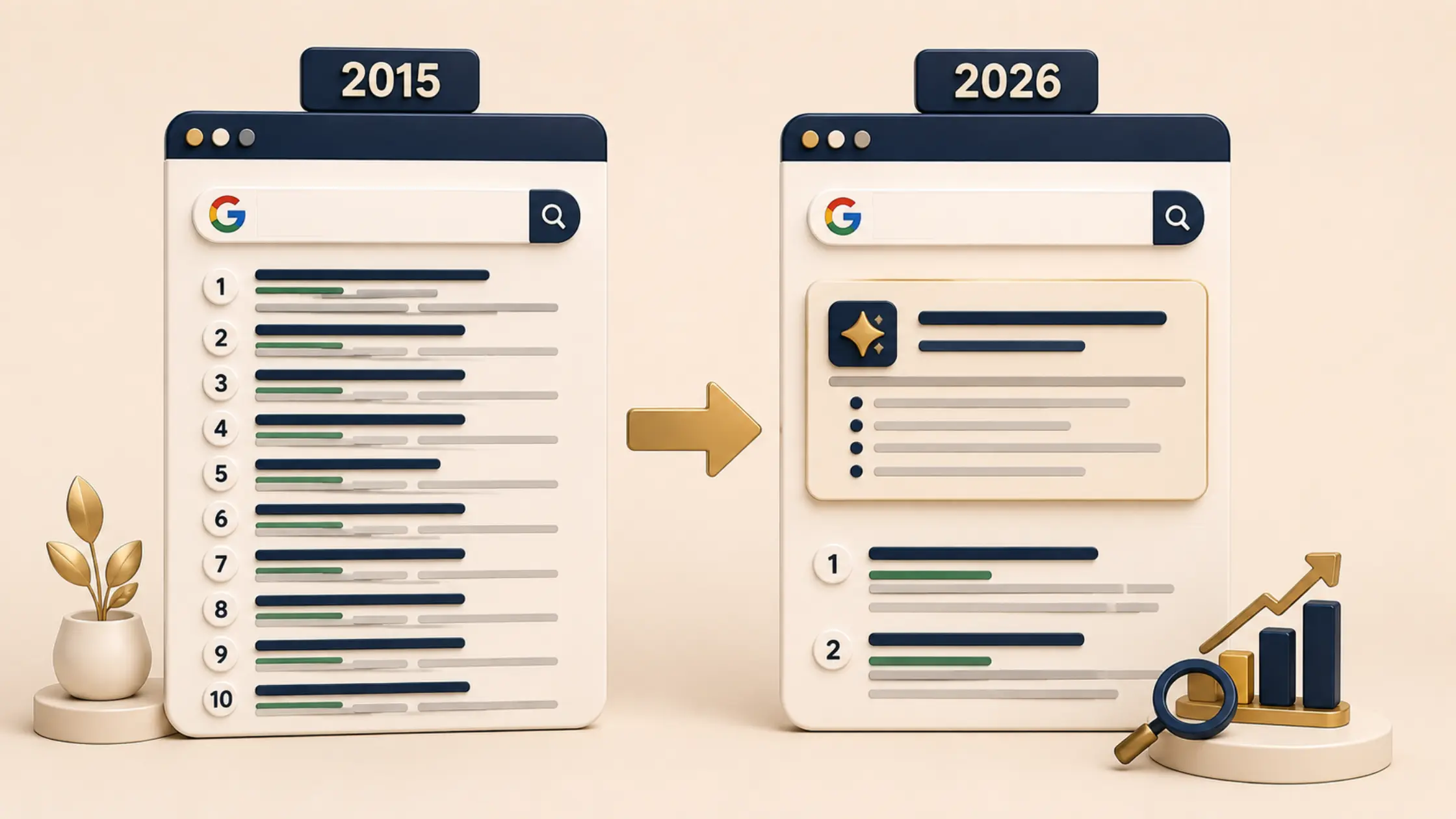
Generative Engine Optimization exists because the search results page itself is changing fast. For almost three decades it looked the same: a search box, ten blue links, maybe some ads.
That model is breaking down. Google AI Overviews now appear in roughly a quarter of all searches, and for comparison or research-heavy queries the share is even higher. Users are getting their answer right there, on the results page, without a single click.
The same shift is happening across AI chat tools. ChatGPT alone reaches hundreds of millions of weekly users, and combined with Google’s AI-powered surfaces, AI answer experiences now touch billions of monthly users worldwide. That’s a scale no marketer can ignore anymore.
This has led to what the industry calls the “zero-click” search. People find their answer and never visit a website. It sounds alarming, but it doesn’t mean your brand becomes invisible — it means visibility is being redefined.
Search behaviour is also becoming more conversational. People no longer type “best CRM software” the way they type into Google. They now ask, “What’s the best CRM for a 10-person sales team on a tight budget?” — a full sentence, almost like they’re talking to a person.
AI engines are built to handle exactly that kind of query. And this is where understanding what is SEO still matters — because GEO doesn’t throw SEO away, it builds directly on top of it.
The Journey So Far: From Classic SEO to GEO in 2026
Generative Engine Optimization didn’t appear overnight; it grew out of decades of SEO history. SEO in its early days was mostly about keywords — stuff enough of them on a page, and you’d rank.
Then Google got smarter. Backlinks, page speed, mobile-friendliness, and content quality all became ranking factors. SEO became a real discipline, not a trick.
By 2023–2024, Google introduced AI Overviews, and the ground started shifting again. Suddenly, ranking #1 organically didn’t guarantee a click — because the AI-generated box above it could answer the question first.
Through 2025 and into 2026, this trend accelerated fast. Google’s core updates began rewarding pages with real experience and original data over generic, mass-produced content. At the same time, AI platforms started drawing more heavily from Reddit, YouTube, LinkedIn, and review sites — not just company websites.
Today, in mid-2026, research shows the overlap between Google’s top organic results and the sources AI engines actually cite has dropped sharply — in some studies from around 70% down to under 40%. That means ranking well on Google no longer guarantees you’ll be cited by AI.
This is the new reality every marketer, business owner, and student learning online digital marketing course in India needs to understand. The rules haven’t been fully rewritten, but they’ve definitely been updated.
GEO vs SEO: What’s Actually Different
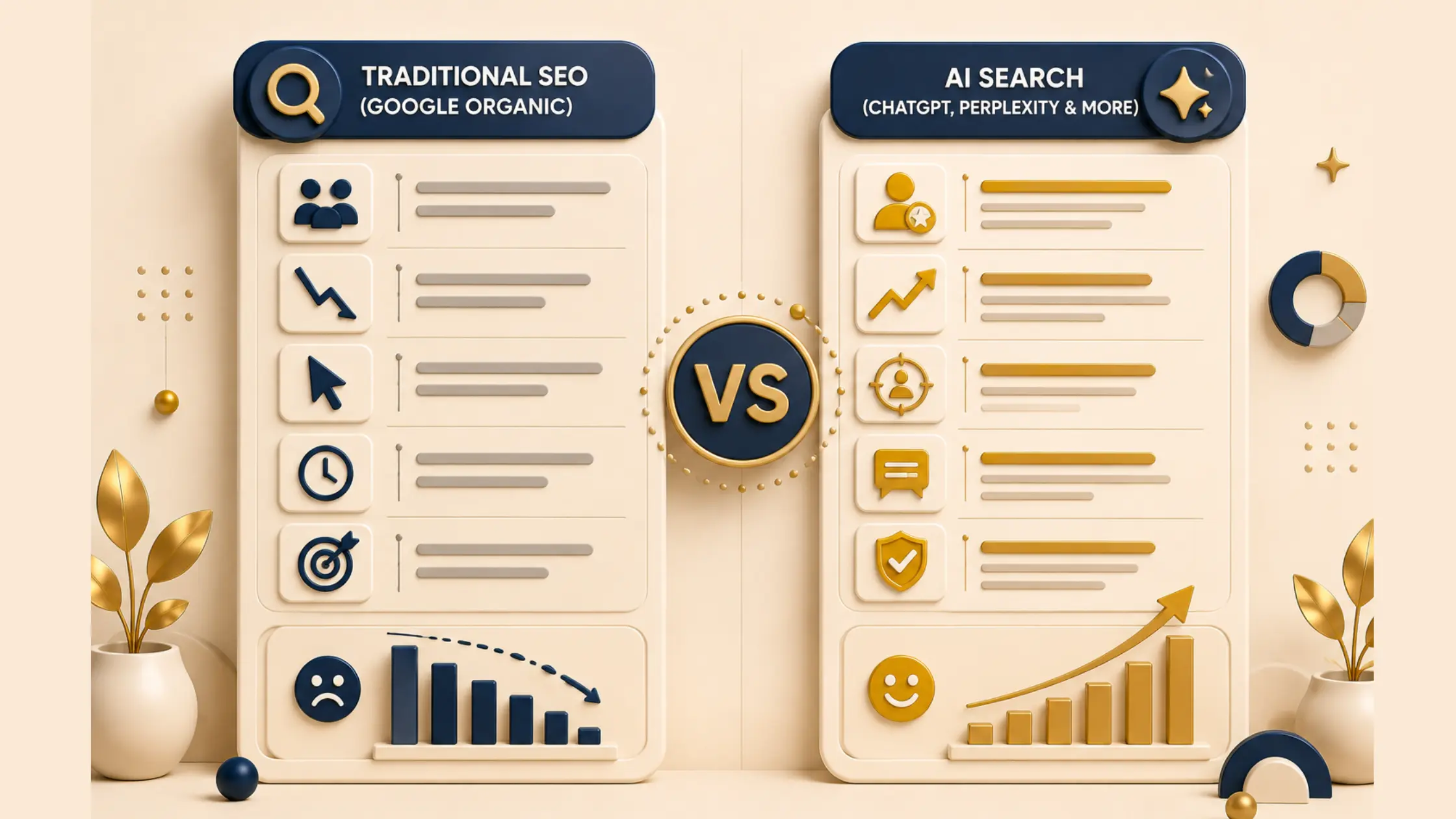
Generative Engine Optimization and SEO share the same DNA — both want your content to be useful, trustworthy, and easy to find. But their scoreboards are different, and knowing the difference changes how you write.
SEO measures success through rankings, organic traffic, and click-through rate. GEO measures success through citations, brand mentions, and share of voice inside AI answers.
Here’s a simple side-by-side breakdown:
| What Changes | Traditional SEO | GEO |
| Primary goal | Rank at the top of search results | Get mentioned inside AI-generated answers |
| Success metric | Rankings, clicks, organic traffic | Citations, mentions, AI share of voice |
| Main platforms | Google, Bing | ChatGPT, Gemini, Perplexity, AI Overviews |
| Content style | Keyword-optimized, comprehensive | Self-contained, extractable, data-rich |
| Trust signals | Backlinks, domain authority | Third-party mentions, Reddit/YouTube presence, Wikipedia |
Here’s an important nuance worth remembering: GEO isn’t replacing SEO. It’s an extra layer sitting on top of it.
Brands doing well in AI search in 2026 are almost always the same brands with strong SEO fundamentals already in place. If you’ve invested in a good online SEO course in India level fundamentals, you’re already most of the way to GEO-ready content.
Why Does GEO Matter for Your Business?
Generative Engine Optimization matters because ignoring AI search is getting more expensive every month. Some businesses still treat it as a small trend they can deal with later.
Consider this: organic click-through rate on Google queries that show an AI Overview has reportedly dropped by more than half in some studies. People simply aren’t clicking through the way they used to.
But here’s the flip side — AI-referred traffic tends to convert far better than average organic traffic. Users arrive at your site already informed, already interested, and closer to a decision.
There’s also a trust dimension. When an AI tool recommends your brand by name, it functions almost like a personal referral — the user didn’t have to compare five links themselves, the AI already did that filtering.
For a training and education brand like RankON Technologies Academy, this matters enormously. Someone asking an AI “which institute should I join for an online SEO course in India?” is a warmer lead than someone scrolling ten search results with no context.
How Does Generative Engine Optimization Actually Work?

Generative Engine Optimization only makes sense once you understand how AI answer engines actually read the web. They don’t read your whole page the way a human does.
Instead, they break content into small chunks, convert those chunks into numerical representations, and retrieve only the most relevant pieces when building an answer. This is called retrieval-augmented generation, or RAG.
That means your carefully written 2,000-word article might only ever get quoted through one clean, three-sentence paragraph. Everything else around it may never be seen by the AI at all.
This is why paragraph structure matters so much more in GEO than in older SEO writing. A paragraph that depends on the sentence before it — using phrases like “as mentioned above” — loses meaning when it’s pulled out alone.
A paragraph that states a fact, a definition, or a comparison completely on its own is far easier for an AI system to lift and quote accurately. That’s the entire logic behind short, self-contained paragraphs.
Proven GEO Strategies to Win AI Mentions
Generative Engine Optimization comes down to a handful of strategies that actually move the needle. Here’s what’s working for AI visibility in 2026.
1. Write Extractable, Self-Contained Paragraphs
Every paragraph should express one complete idea. If it were pulled out and shown alone in a chat window, it should still make total sense.
Lead with the answer first, then explain. Don’t build up slowly to your point — AI systems favour content that states the conclusion early.
2. Add Real Statistics, Data, and Quotes
Pages containing specific numbers, benchmarks, and quotes are cited significantly more often than pages full of vague statements. “Many businesses see growth” tells an AI nothing useful.
“Businesses using GEO strategies saw up to 40% higher visibility in AI answers” is something an AI can actually extract and use. Specificity is what earns citations.
3. Build Entity Clarity Around Your Brand
AI systems need to clearly understand what your brand is, what category it belongs to, and what it’s known for. Inconsistent descriptions across your website, LinkedIn, and directories confuse this signal.
Keep your brand description, offerings, and positioning consistent everywhere you appear online. This consistency is what allows an AI to confidently say “RankON Technologies Academy teaches digital marketing” instead of guessing.
4. Earn Mentions Beyond Your Own Website
A large share of AI citations come from third-party sources — Reddit threads, YouTube videos, review platforms, and industry publications — not brand-owned websites alone. AI systems treat independent mentions as stronger trust signals than self-promotion.
Get genuine reviews on Google and industry platforms, participate meaningfully in relevant online communities, and pursue mentions in trusted publications. This earned visibility compounds over time, much like backlinks did for traditional SEO.
5. Keep Content Fresh and Well-Structured
AI crawlers show a strong preference for recently updated content, especially for fast-moving topics like AI search itself. An article last updated in 2023 will keep losing ground to one refreshed in 2026.
Use clear H1, H2, and H3 headings so AI systems can map your page structure to specific questions. Break information into lists, tables, and short paragraphs wherever it makes the content easier to scan.
6. Strengthen Your Technical SEO Foundation
If AI crawlers can’t access or render your page properly, none of the above matters. Heavy reliance on JavaScript can make content invisible to many AI crawlers.
Make sure your site loads fast, works well on mobile, and serves core content in a format that doesn’t require complex rendering. Add structured data (schema markup) so machines can confirm what your page is actually about.
How to Measure Your GEO Performance
Measuring Generative Engine Optimization is trickier than measuring SEO, because the “click” disappears. Traditional tools like Google Search Console can’t see what happens inside an AI chat window.
Even so, there are ways to track your GEO progress. Start by regularly asking AI tools questions relevant to your industry and noting whether, and how, your brand shows up.
Track these four things consistently:
- Citation frequency — how often AI tools mention your brand at all
- Share of voice — how you compare to competitors within the same answers
- Context — which specific questions or topics trigger your mentions
- Sentiment — whether the mention is positive, neutral, or negative
Dedicated AI visibility tools have also started appearing on the market, built specifically to track brand mentions and sentiment across ChatGPT, Gemini, and other engines. For most small and mid-sized brands, manual prompt testing combined with basic tracking is still a solid starting point.
Common GEO Mistakes to Avoid
Generative Engine Optimization goes wrong most often when brands treat it as a one-time project. AI citations shift monthly, and content that isn’t refreshed regularly loses ground fast.
The second mistake is stuffing content with keywords the old way. Research from the original Princeton study actually found that keyword stuffing performs worse than natural writing in AI systems — the opposite of old-school SEO instinct.
The third mistake is ignoring platforms outside your own website. If your brand never appears on Reddit, YouTube, or review sites, you’re invisible to a huge share of what AI systems actually read.
The Future of GEO — Especially for Indian Brands
Generative Engine Optimization in India is still in its early stage, which is actually good news. Most Indian businesses haven’t started optimizing for AI search yet, so brands that begin now get a real head start.
As AI shopping assistants, voice search, and India-focused AI tools grow, the businesses with clear, well-structured, trustworthy content will be the ones AI systems learn to trust first. This is exactly the kind of skill set covered inside RankON Technologies Academy’s online digital marketing course in India programs.
Understanding how tools like Google AI Overview work isn’t optional knowledge anymore for digital marketers. It’s becoming as fundamental as understanding keywords was a decade ago.
Final Thoughts
Generative Engine Optimization isn’t a passing trend — it’s the next chapter of a discipline you may already know well. The core values haven’t changed: be clear, be useful, be trustworthy.
What’s changed is who — or what — reads your content first. Sometimes it’s a human. Increasingly, it’s an AI deciding whether you deserve to be part of the answer.
If you want to build these skills properly, with hands-on practice on real AI search tools, RankON Technologies Academy’s digital marketing programs are built around exactly this shift. Explore our online digital marketing course in India to get started.
FAQs on What is Generative Engine Optimization
Is GEO replacing SEO?
No. GEO builds on SEO fundamentals rather than replacing them. Strong technical SEO, quality content, and credibility signals remain the foundation that makes AI visibility possible in the first place.
How long does GEO take to show results?
Most experts observe visibility changes within four to eight weeks of consistent effort, though results vary by platform and topic. Like SEO, GEO rewards sustained effort far more than one-time fixes.
Can small businesses compete with big brands in AI search?
Yes, and often more easily than in traditional SEO. AI systems tend to favour brands with clear topical focus and strong structure, which gives smaller, specialized businesses a real chance to be cited over larger, more generic competitors.
Which platforms matter most for GEO right now?
Google AI Overviews, ChatGPT, Gemini, and Perplexity currently drive the largest share of AI-generated answers. Each platform pulls information slightly differently, so testing your visibility across all of them is worth the effort.