
If you’ve been searching for SEO course fees in India, you’ve probably noticed the numbers are all over the place. One site says ₹6,000. Another says ₹80,000. And you’re left wondering which one is actually fair.
I get this question a lot, so let me answer it properly. In this guide, I’ll walk you through what SEO course fees in India really look like in 2026, what factors affect the price, and how to tell if you’re paying for something worth it or just a fancy brochure.
I run SEO training at RankON Technologies Academy, so I’ll also be honest about our own pricing along the way. No sugarcoating.
What Are SEO Course Fees in India Right Now?

Let’s start simple. SEO course fees in India usually range from ₹6,000 to ₹80,000. That’s a huge range, I know. But it makes sense once you break it down in terms of what you’re getting.
Here’s how I’d explain it to a friend:
| Course Type | Fee Range | Duration |
| Basic online course | ₹6,000 – ₹20,000 | 1–2 months |
Standard course (SEO + basics of digital marketing) | ₹20,000 – ₹40,000 | 3 months |
| Advanced course with tools and internship | ₹40,000 – ₹80,000 | 6 months |

A cheap course teaches you the basics of what is SEO and how it works. A standard course often combines SEO with other marketing skills, so understanding Digital Marketing Course Fees in India can help you compare the overall cost of broader training.
A costlier course usually puts you on real projects. Neither one is “wrong” — it just depends on what you need right now. At RankON Technologies Academy, we keep prices in the ₹20,000-₹40,000 range. I’ll explain our exact plans a bit further down.
What Factors Affect the SEO Course Fees in India?
This is the part most blogs skip, so let me be direct. A bunch of things quietly decide whether a course is priced at ₹8,000 or ₹60,000. Once you know these, you’ll stop judging a course by its price tag alone.
- Course level and depth: A basic course covering just on-page SEO will always cost less than one covering on-page, off-page, technical, local, and international SEO together. More depth means more content to teach, which means a higher fee.
- The trainer’s experience: Someone who has actually ranked real websites for real clients charges more than someone who just reads slides. And honestly, that gap shows up directly in how much you actually learn. A trainer with years of hands-on SEO work brings insights you simply won’t find in a textbook.
- Live projects: If a course lets you work on a real website instead of a fake demo site, that costs more to organise. You end up paying for it, but you also get a lot more out of it. Practical exposure to real audits and campaigns is worth more than watching video lessons alone.
- Online vs offline delivery: Self-paced online courses are usually the cheapest. Live online classes fall somewhere in the middle. Classroom training costs the most because of rent, infrastructure, and trainer overheads.
- Course duration: A short 2 to 4 week course will always cost less than a 3 to 6 month program. Longer courses also tend to include more assignments, mentoring, and assessments, which adds to the fee.
- Tools included: Ahrefs, SEMrush, Screaming Frog, SE Ranking, Google Keyword Planner, Google Search Console, and Google Analytics — these are all paid and free tools. If your course gives you real, working access to them, expect the fee to be higher.
- Certification: Some institutes charge more for a certificate that actually carries weight with employers. That said, don’t judge a course purely on certification. Practical skill matters more when it comes to actually landing a job.
- Placement and career support: Resume building, mock interviews, real hiring connections, freelancing guidance — these all take real effort to run. A course offering genuine placement support will usually cost more than a training-only program.
- Location and institute reputation: Fees vary widely across cities and institutes. Bigger, more established names in metro cities often charge more because of brand reputation, better trainers, and stronger placement networks.
- Individual mentorship: One-on-one mentoring costs more than sitting in a large batch. If you get personal feedback on your own website audits and keyword strategies, that also pushes the fee up.
- Lifetime access and support: Some programs throw in lifetime access to recordings, updated materials, and ongoing trainer support after the course ends. This kind of long-term value can justify a slightly higher fee.
- Currently, the curriculum: SEO changes constantly. A course that regularly updates its syllabus to include AI search, Core Web Vitals, and structured data will usually be priced a bit higher than one still teaching outdated tactics from a few years ago.
What Is Included in an SEO Course?
A good SEO course isn’t just one topic. It’s a mix of skills that work together to make you job-ready. Let me break down what a complete course should actually include, module by module.
| Module | What You Actually Learn |
| On-page SEO | Titles, meta tags, headings, content structure, internal linking, and External linking, Image optimization |
| Off-page SEO | Backlinks, guest posts, digital PR, outreach, link building |
| Technical SEO | Site speed, mobile-friendliness, crawling, indexing, Core Web Vitals |
| Local SEO | Google Business Profile, local citations |
| Keyword research | Search intent mapping, competitor keyword analysis |
| Tools training | Google Search Console, GA4, Ahrefs, SEMrush, Screaming Frog, SE ranking |
| AI search (AEO/GEO) | Optimizing content for AI Overviews, ChatGPT, Perplexity, and all major LLMs Platforms |
| Career support | Resume help, interview prep, freelancing guidance, and internship opportunities |
Before you pay any fee, you should know what a proper SEO course needs to cover in 2026. It’s changed a lot from even three years ago.
The Basics of SEO Course You Still Need
Every good course should start with the fundamentals. This is basically the foundation of what is SEO in the first place, so don’t skip a course that skips this:
On-page SEO: everything you can control directly on your page. Titles, meta tags, headings, content structure, internal linking, and External linking. It’s usually the first thing you learn, and for good reason.
Off-page SEO: this is about building trust outside your own website. Backlinks, guest posts, digital PR, link building. It tells Google other sites to vouch for you.
Technical SEO: the behind-the-scenes stuff. Site speed, mobile-friendliness, how well Google can crawl and index your pages, fixing broken links, and Core Web Vitals.
Local SEO: Google Business Profile, local citations, and getting found by people searching near you.
Along with these four, a solid course will also cover keyword research, search intent, Google Search Console, Google Analytics, and schema markup.
Together, on-page, off-page, and technical SEO make up the three pillars of the subject. If a course only teaches one or two of these, you’re getting an incomplete picture, no matter how good the price looks.
The New Era of SEO Skills You Can’t Skip Anymore
Here’s the part most fee-comparison blogs completely miss. Search itself has changed.
You’ve probably noticed Google AI Overview now — that answer box that shows up on top of your search results. When it appears, fewer people click through to actual websites. I’ve seen this hit real client traffic, not just something I read about.
This is why courses in 2026 need to teach two newer skills:
AEO (Answer Engine Optimization): writing your content so tools like Google’s AI Overview, ChatGPT, and Perplexity can pull a clear answer straight from your page.
GEO (Generative Engine Optimization): building enough authority that AI tools like Perplexity, Gemini, and Claude actually mention your brand when someone asks them a question.
If your SEO course doesn’t touch AEO and GEO, you’re learning half a skill. You’ll know how to rank a page. You won’t know how to get your content picked up inside an AI answer. In 2026, both are part of the same job.
At RankON Technologies Academy, we’ve built AI search training into our Foundation and Expert plans for exactly this reason.
What We Charge at RankON Technologies Academy
I’ll keep this simple and just tell you what we actually offer.
Online Plan — ₹20,000, 3 months: Full SEO training, live sessions, a freelancing module, interview prep, and certification. Good if you want to learn from home and don’t need a classroom.
Foundation Plan — ₹30,000, 3 months, offline: Same content as the online plan, but in a classroom with direct mentor access every session. Better if you learn faster face-to-face.
Expert Plan — ₹40,000, 6 months: Everything above, plus hands-on training on Ahrefs, SEMrush, and Screaming Frog, WordPress training, an internship, and full placement support. This one’s built for people who want a real job at the end of it.
I always tell people — don’t just pick the most expensive plan because it sounds better. Pick the one that actually matches what you need right now.
Online vs Offline SEO Course Fees in India
This is one of the first decisions you’ll make, so let me lay it out clearly.
| Format | Typical Fee Range | Best For | Trade-off |
| Online (live or self-paced) | ₹6,000 – ₹30,000 | Working professionals, students who want to skip commute | Less in-person mentoring, needs self-discipline |
| Offline (classroom) | ₹20,000 – ₹50,000 | Freshers who want hands-on guidance and a structured routine | Higher fee, may need travel |
Online courses are cheaper simply because there’s no classroom, no rent, and no extra infrastructure to maintain. If you want to learn from home, choosing the right online SEO course in India can give you structured training without the additional cost of attending offline classes. You save money, but you also need to be a bit more disciplined about actually showing up and doing the work.
Offline courses cost more, but many students still prefer them. Sitting in a room with a trainer, asking questions on the spot, and learning alongside other students has real value that a recorded video can’t replace.
If you’re not sure which one fits you, think about how you’ve learned best in the past. If you’ve completed online courses before and stuck with them, go online and save the money. If you’ve always needed a classroom to actually finish something, offline is worth the extra fee.
At RankON Technologies Academy, our Online Plan (₹20,000) and Foundation Plan (₹30,000, offline) let you choose based on exactly this — same core content, different formats.
Does the Fee Actually Pay for Itself?
Let’s talk numbers, because this is what most people actually want to know.
A fresher SEO analyst in India usually starts around ₹2 to ₹4 lakh a year — roughly ₹16,000 to ₹33,000 a month. If you’ve paid ₹20,000 to ₹40,000 for your course, your very first month’s salary can already cover most of it.
That’s assuming you land the job, of course. And that’s exactly why I keep pushing the point about live projects. A certificate alone doesn’t get you hired. Being able to actually run a keyword audit in an interview does.
A Quick, Honest Example
Say you’re comparing three options. A ₹6,000 self-paced course. A ₹60,000 course in a big city that means you’d have to relocate. And a mid-range ₹20,000–₹40,000 course closer to home with real project work.
The ₹6,000 course looks cheapest, but without live practice, you’ll probably spend another two or three months teaching yourself off YouTube before anyone takes you seriously.
The ₹60,000 course adds relocation and rent to the fee. Suddenly you’re closer to ₹80,000, and most SEO jobs today are remote anyway, so the “big city” part barely matters.
The mid-range option, with real audits and no relocation, usually gets you job-ready the fastest. I’m not saying this because it’s what we charge — it’s just the math that plays out most often.
What Is Included in SEO Course Fee vs Extra Cost?

Not every rupee you spend shows up in the listed fee. Before you enroll anywhere, it helps to know what’s usually bundled in and what tends to show up later as a surprise cost.
Usually included in the fee:
- Core SEO training — on-page, off-page, technical, LOcal SEO, AI SEO
- Access to standard tools during the course (shared logins or basic plans)
- Study material, recordings, or notes
- Certification on completion
- Live project or internship exposure, if the course advertises it
- Basic placement support like resume help and interview prep
Often billed separately, or easy to miss:
- Global certification exam fees, if a third-party body charges for it
- Premium or individual tool subscriptions beyond what the course provides
- Travel or relocation costs, if the course is offline in another city
- EMI processing charges, which can quietly make monthly payments cost more than paying upfront
- Advanced workshops or add-on modules introduced after the main course
- Website hosting or domain costs, if a live project needs a real, working site
Before you pay anything, ask the institute for a full written breakdown of what’s included in the fee and what isn’t. A course that lists everything upfront — tools, certification, live projects, placement support — without hidden add-ons is usually the safer bet.
Red Flags to Watch Out For
A few things I’d tell anyone before they pay a single rupee:
- “100% placement guarantee.” No institute controls another company’s hiring decision. Ask how many interviews their last batch actually got instead.
- EMI that hides the real cost. Small monthly payments can quietly add up to more than paying in one go. Read the fine print.
- A certificate with no live work behind it. It looks nice on paper, but interviewers will ask you to show your work, not your certificate.
- A syllabus that hasn’t changed since 2022. If AEO and GEO aren’t mentioned anywhere, that course is already behind.
SEO Course Fees Across Indian Cities
Location changes the price too. Rent and trainer salaries aren’t the same everywhere.
- Delhi: ₹22,200 – ₹65,000
- Bangalore: ₹30,000 – ₹49,000
- Pune: ₹18,000 – ₹80,000
- Hyderabad: ₹6,000 – ₹25,000
Smaller cities like Jaipur or Chandigarh usually sit lower, often between ₹5,000 and ₹30,000. That’s not a bad thing — smaller batches often mean more one-on-one attention. Don’t assume a big city automatically means a better course. Look at the trainer and the syllabus first.
SEO Course Fees in India by Duration
Duration tells you a lot about how deep a course actually goes. Here’s how our own three plans break down by duration, so you can see exactly what changes as the course gets longer.
| Package | Duration | Fee | What’s Included |
| Online | 3 months | ₹20,000 | SEO training, live demo, freelancing module, interview prep, certification |
| Foundation | 3 months (offline) | ₹30,000 | Everything online, plus in-person classroom training |
| Expert | 6 months | ₹40,000 | Full SEO + AI search training, tool access, WordPress, internship, placement support, certification |
A few things worth noticing here. Online and Foundation are both 3-month programs covering the same core SEO modules — the ₹10,000 gap between them is purely about format: live online versus offline classroom.
Expert, at 6 months, is the only plan that includes deep tool training, WordPress, and a real internship. That’s also why it’s priced higher than the other two — you’re not just paying for more weeks, you’re paying for more hands-on exposure.
If you only need core SEO skills, 3 months is enough. If you want tool mastery and internship experience on your resume, the 6-month route is worth the extra cost.
How Long Should the SEO Course Be?
Most SEO courses in India run for 1 to 6 months.
A 1–2 month course gives you the basics — good if you just want an overview. A 3-month course adds real depth and suits beginners or small business owners who want to manage their own site. A 6-month course with an internship is what I’d recommend if you want an actual SEO career.
If you already run a business and just want to improve your own website, 3 months is usually enough. If you want a full-time job in this field, go for the 6-month route.
Is the Certificate Even Worth It?
Yes, but only if it’s backed by real work. A certificate on its own is just paper. What actually matters is whether you can show a hiring manager a project you built, not just a PDF you were handed.
Ask yourself — does this certificate come with a portfolio? Is the institute known for actually placing people? If the answer’s no on both counts, the certificate alone won’t do much for you.
Course Fee vs Hiring an Agency
This is a question small business owners ask me a lot, so I’ll answer it directly.
An SEO course usually costs ₹20,000 to ₹40,000. You learn the skill once and use it forever. Hiring an agency, on the other hand, can run you ₹10,000 to ₹75,000 every single month.
If you’re running a small business, learning SEO yourself often saves you a lot more money over a few years than paying someone else month after month. Plus, you stay in control of your own site.
Who Should Skip the Expensive Placement Plans?
Not everyone needs the full package, and I’d rather tell you that upfront than sell you something you don’t need.
If you already run a business, skip the placement add-on — you don’t need a job, you need to manage your own site. If you’re planning to freelance, go for a plan with a strong freelancing module instead of a placement-heavy one. And if you’re not even sure SEO is for you yet, start with the cheapest plan first. You can always upgrade later.
What Jobs Can You Actually Get After This?

An SEO course doesn’t just lead to one job title. Here’s what opens up once you’re done:
- SEO Analyst: keyword research and on-page fixes
- SEO Executive: daily optimization work under a senior lead
- SEO Writer: writing content built to rank and get picked up by AI tools
- SEO Specialist: managing Google Business Profiles for local shops
- Freelance SEO Consultant: running your own client base
- Digital Marketing Executive: SEO combined with a broader marketing role
Your course fee is really an entry ticket into any of these, not just one narrow job.
How Do I Pick the Right Institute?
Before you pay anyone, ask these questions directly:
- How many live projects will I actually work on?
- Will I get real tool access, not a demo version?
- Has the trainer actually ranked a real website before?
- Does the course include AEO and GEO, or just old-style SEO?
- What happens to my course access once it’s over?
A good institute will answer all five without hesitating. If they dodge even one, that’s worth noticing.
Why Learn SEO From RankON Technologies Academy?
Anyone can write “Best SEO Institute” on their homepage. Instead of asking you to trust that line, here’s what’s actually behind it — in numbers.
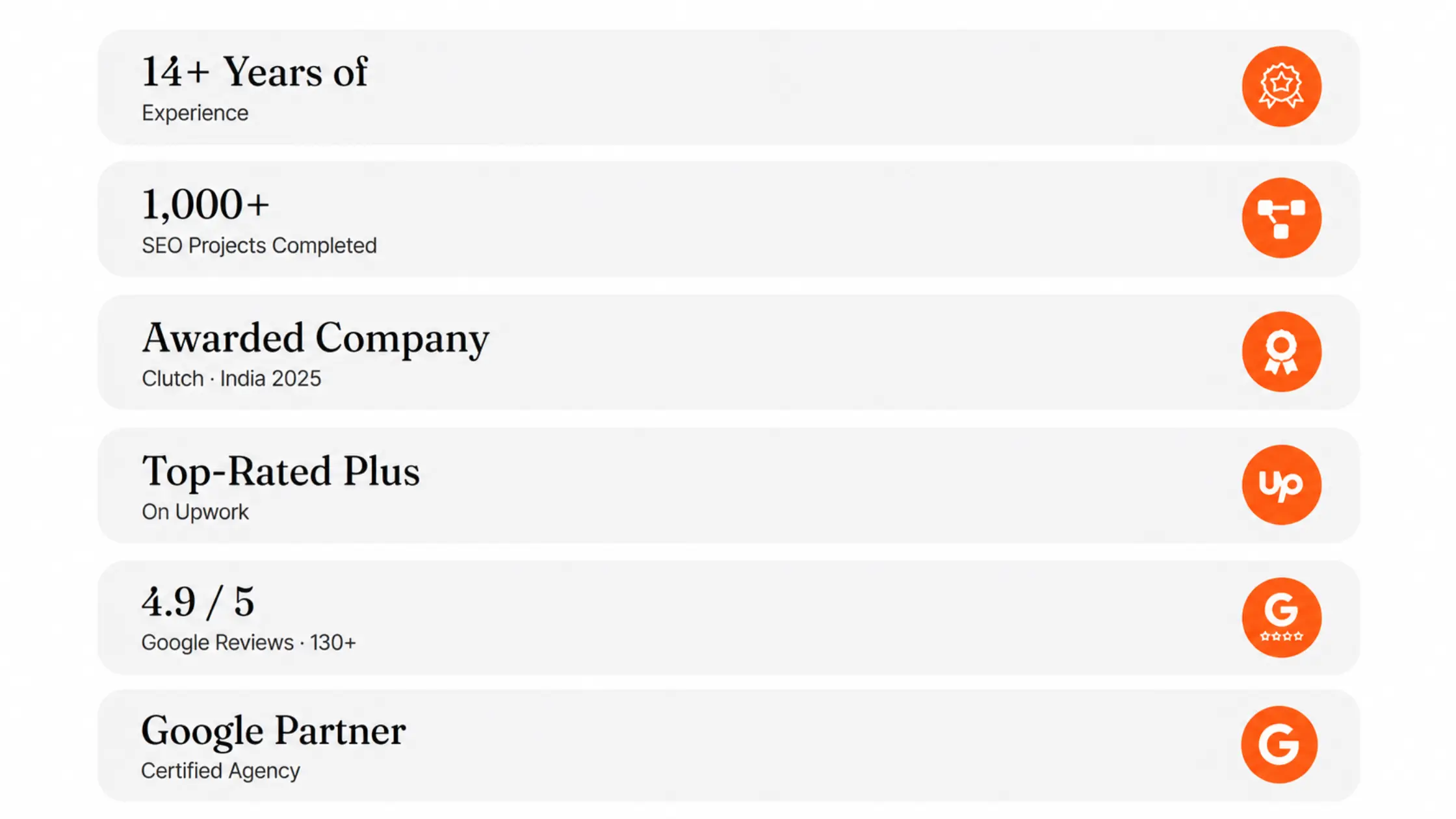
RankON Technologies Academy — At a Glance
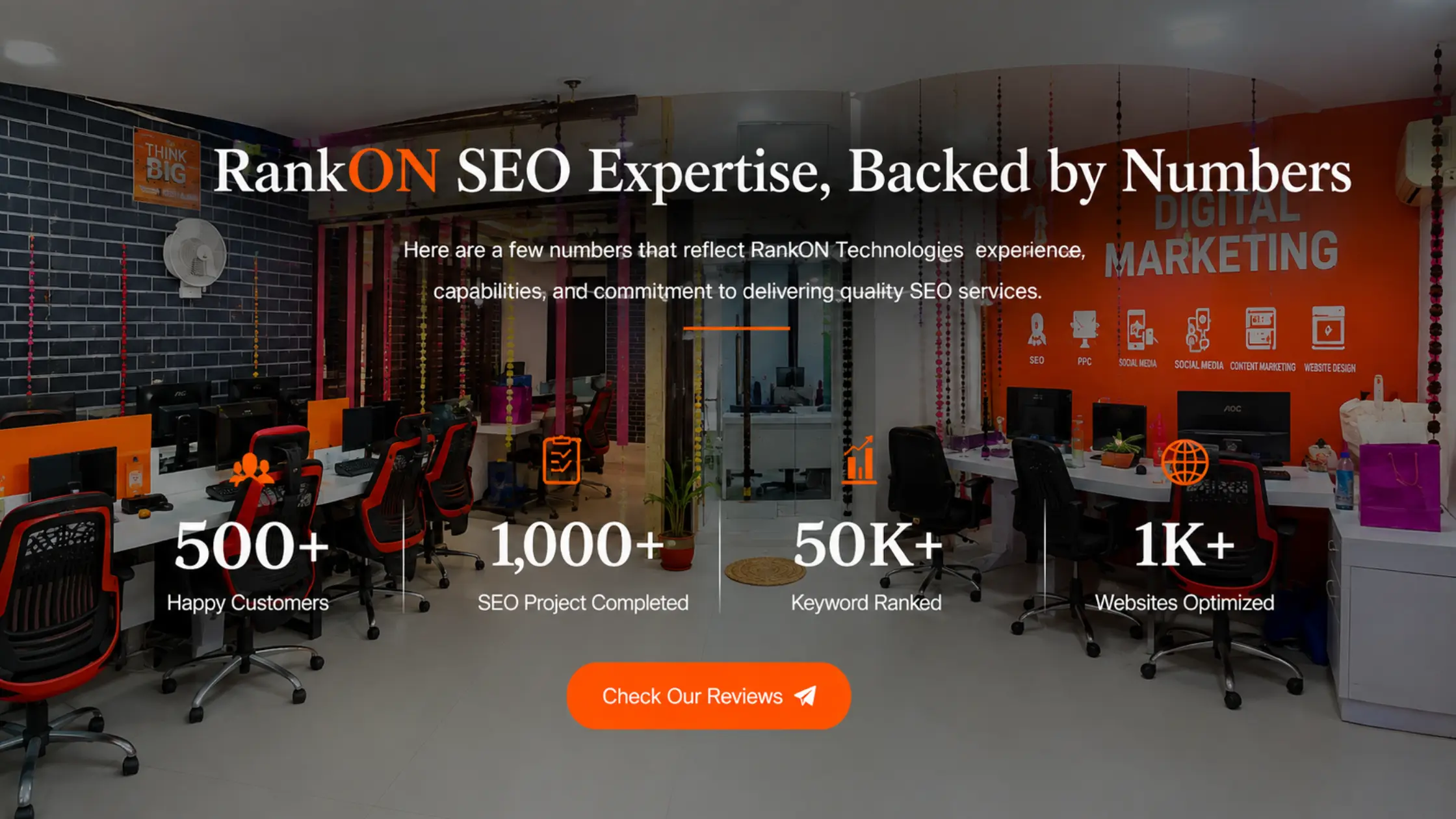
| Metric | Number |
| Industry Experience | 14+ Years |
| SEO Projects Completed | 1,000+ |
| Websites Optimized | 1,000+ |
| Keywords Ranked | 50,000+ |
| Happy Customers | 500+ |
| Google Reviews | 4.9 / 5 (130+ reviews) |
These aren’t numbers from a case-study PDF — they’re from real client work, and the same experience goes into every batch we train.
Awards & Recognition

| Recognition | Given By |
| Google Partner (Certified Agency) | |
| Top-Rated Plus | Upwork |
| Clutch Champion — Fall 2024 | Clutch |
| Top SEO Company, Business Services India | Clutch |
None of these are things you can just buy. Google Partner status comes from actually meeting Google’s own standards. Upwork’s Top-Rated Plus only happens when clients keep coming back. And Clutch verifies its awards through real client interviews, not self-submitted claims.
I’m sharing all this for one simple reason — when you pick a course, you’re not just picking a syllabus; you’re picking who trains you. You should know exactly who that is before you pay.
What This Means For You, Depending on Who You Are
| You Are | Why Our Experience Helps You |
| Student | Trained by people who’ve handled live client SEO, not just slides — same frameworks used on our 1,000+ projects |
| Working Professional | Syllabus stays current (AEO, GEO included) because we use it on live client work right now |
| Freelancer | Upwork Top-Rated Plus status is built into our freelancing module — we know what actually gets you hired again |
| Business Owner | 50,000+ keywords ranked, 1,000+ sites optimized — results you can verify yourself, not just a certificate |
| Homemaker / Work-from-home learner | Learn a real, flexible skill from a team that’s run 1,000+ live projects — not just theory you’ll forget in a month |
At the end of the day, badges and numbers don’t teach you SEO. But they do tell you whether the people teaching you have actually done this before. That’s really all this section is meant to show you.
Conclusion:
SEO course fees in India range anywhere from ₹6,000 to ₹80,000, and honestly, the number by itself doesn’t tell you much. What matters is the syllabus, the live project work, and whether the course is actually built for how search works in 2026 — not how it worked in 2020.
At RankON Technologies Academy, our three plans — Online at ₹20,000, Foundation at ₹30,000, and Expert at ₹40,000 — are designed to suit different budgets, with real SEO training and AI search skills in every plan.
FAQs On SEO Course Fees In India
What is the average SEO course fee in India?
Most full 3-month certification programs fall between ₹20,000 and ₹40,000.
Is a ₹6,000 SEO course worth it?
It’ll teach you the basics, but you probably won’t get live projects or placement support. It’s a fine starting point, just not a complete solution.
Are online SEO courses cheaper than offline ones?
Yes, usually by about 20–30%, since there are no classroom or infrastructure costs involved.
Does an SEO certificate guarantee a job?
No certificate guarantees a job on its own. What actually helps is real project work, along with interview prep and placement support.
Can someone with no tech background learn SEO?
Absolutely. You don’t need to know how to code. Students, business owners, working professionals — anyone can pick this up from scratch.
How long before I’m job-ready?
Most people get there in 3 to 6 months, depending on how much hands-on practice they get versus just watching videos.
Is EMI available for SEO course fees?
Yes, most institutes, including us, offer flexible payment options so the full fee isn’t due upfront.
Do I really need to learn AEO and GEO in addition to regular SEO?
Yes. Google and AI tools like ChatGPT and Perplexity are changing how search results show up. Skipping this leaves a real gap in your skills.
What’s the difference between a digital marketing course and an SEO course?
An SEO course focuses only on search. A digital marketing course covers SEO plus Google Ads, social media, and other channels.
Can I start freelancing right after a 3-month course?
Yes, as long as the course includes a freelancing module and real project practice.
If you’re ready to start, feel free to reach out to us at RankON Technologies Academy, and we’ll help you choose the plan that best fits your needs.